
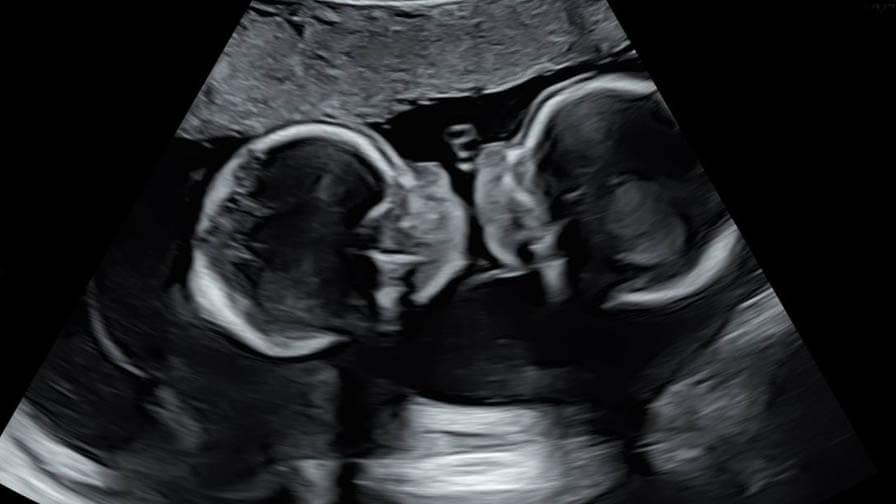
Twin-twin transfusion syndrome affects between 10 and 15 percent of identical twins who share a placenta – between 300 and 400 pregnancies each year in the UK. Abnormal connections develop in the shared placenta, connecting the babies’ blood supplies. This causes unequal sharing of blood between them and can be life-threatening.
Severe cases are usually treated by laser ablation surgery. This is a keyhole procedure, with a small laser inserted through a cut in the womb and then used to block the blood vessels causing the problem. But it carries risks, many of them due to its invasive nature. Sometimes it can still only save one twin, and sometimes neither baby survives. There is also a risk of infection, miscarriage or premature birth.
Between 2014 and 2016 Professor Christoph Lees and his team received funding from Action to investigate the safety and effectiveness of a new technology called high intensity focused ultrasound, also known as HIFU. It was already being used to treat uterine fibroids and to kill tumours.
The technique uses a focused ultrasound beam, generated outside the body and aimed precisely at a treatment area inside the womb.
“As it does not involve invasive surgery, we believed it could be safer,” says Professor Lees. “It could also mean babies could be treated earlier in pregnancy, hopefully improving their chances of surviving and escaping disability.”
The Action-funded work showed that this could potentially block blood vessels in the placenta safely and effectively, without affecting the course of pregnancy.
These promising early results were key to the research team securing a further £2.2 million grant from the Medical Research Council in 2017, funding a clinical trial of the procedure in 10 pregnant women across the UK and Europe.
This world-first study has now confirmed what Action’s early funding first pointed towards. Published in the American Journal of Obstetrics and Gynecology, the trial found that HIFU can safely stop blood flow in the abnormal placental vessels that cause twin-twin transfusion syndrome.
The next stage of work will be a larger trial involving 50 to 100 women, moving this treatment another step closer to becoming a treatment option for families facing this frightening diagnosis.
The results from the Action-funded work showed that our new ultrasound-based technique appears to be effective – and, importantly, has few side effects.