
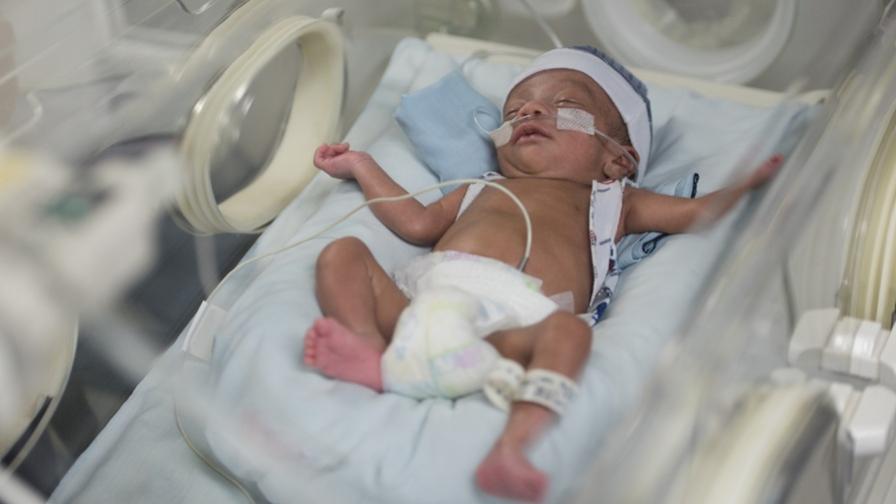
Necrotising enterocolitis (NEC), a serious gut disease, and sepsis are two of the most common serious illnesses that can affect very premature babies. Sadly, some lose their lives due to these dangerous complications – and those who survive are often left with lifelong disabilities.
It was already known that breast milk could reduce the risk of NEC and sepsis in premature babies, with evidence suggesting that this was due to immune-boosting factors.
With Action funding, Professor Darren Smith and his team analysed breast milk samples. They focused on the role played by phages, naturally occurring viruses that can infect, kill or change how bacteria grow. These tiny viruses are believed to play an important role in shaping the gut microbial community of premature babies, supporting the immune system in early life.
Studying milk samples donated by mothers of very premature babies, the team discovered that phages are abundant from the first week after birth and remain throughout the first 100 days of lactation. The research also found that these phages can bind to naturally occurring fats in the breastmilk and are delivered from mother to child.
In laboratory tests, the researchers found that phages taken from breast milk could change the composition of bacteria, suggesting they may help shape early gut health.
Thanks to this Action-funded study, the team, based at the University of Northumbria, has since been able to launch a further larger study, with £1.2m of funding from the UKRI Biotechnology and Biological Sciences Research Council. This next phase will explore in more detail the mechanism of how phages are carried in the fats of breast milk and how this changes bacterial communities and compatibility with the immune system of premature babies.
We’re extremely excited to have received significant further funding, following on from our Action-funded project. This research could really make a difference in understanding how mother’s own milk could protect their premature babies”