

Treating infections in children with weakened immune systems
Each year around 400 UK children – most of them under the age of 10 – undergo a stem cell transplant. These are used to treat conditions that severely weaken the immune system, or to treat blood cancers and other rare blood disorders. Sadly, some children develop life-threatening viral lung infections while awaiting or undergoing their treatment, and many do not survive.
Dr Claire Smith, at UCL Great Ormond Street Institute of Child Health, is testing new combinations of existing antiviral medicines to find safer and more effective treatments for these infections.
This research could help protect some of the most vulnerable children and save lives.
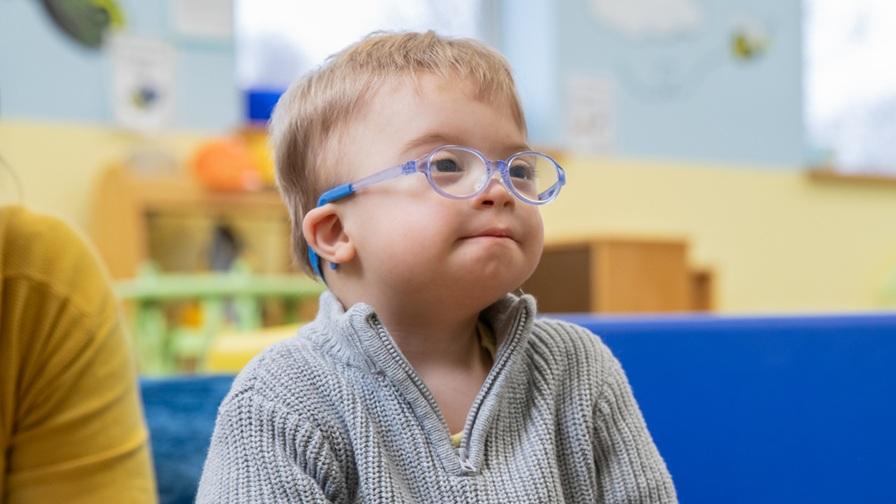
Helping children with learning disabilities to wear their glasses
Around 349,000 children in the UK have a learning disability, and many need glasses to see clearly. Wearing glasses consistently is important to support healthy vision development and prevent permanent sight loss. But for some children, this can be difficult.
Dr Emma McConnell, at Queen’s University Belfast and Belfast Health and Social Care Trust, is leading a team who are developing practical strategies to help children with learning disabilities wear their glasses more successfully.
By making it easier for children to use their glasses, this project aims to support learning, confidence and long-term eye health.
Testing a cot-side scanner for newborn babies
Around 55,000 babies are born too soon each year in the UK, with around 1,500 diagnosed with brain injury. Around 2,200 full-term newborn babies also experience brain injury at or around birth. Identifying babies who are at greatest risk of lifelong disability from brain injury remains a major challenge.
Professor Topun Austin, at the University of Cambridge, is testing a new cot-side scanner that provides an unprecedented window into how a baby’s brain is working.
This technology could transform how brain injuries are diagnosed and treated, improving long-term outcomes for sick and preterm babies worldwide.
Fighting a devastating rare metabolic disease
Non-Ketotic Hyperglycinemia (NKH) is a rare inherited condition that causes a harmful build-up of glycine in the brain. Babies often become seriously ill soon after birth, and there is currently no cure.
Professor Nicholas Greene, at UCL Great Ormond Street Institute of Child Health, is developing cutting-edge new therapies to correct glycine levels and help slow or prevent the progression of symptoms.
This early-stage research could ultimately lead to life-changing treatments for babies born with this devastating condition.
Finding new drugs to block T-ALL cancer cells
Nearly 100 children and young people in the UK are diagnosed each year with T-cell acute lymphoblastic leukaemia (T-ALL). While many are cured, outcomes are much poorer when the disease does not respond to treatment or returns.
Dr Frederick van Delft, at Newcastle University, is testing new targeted drugs that work by blocking key proteins cancer cells need to survive.
This research could lead to more effective treatments for children with the most aggressive forms of T-ALL.