
In June 2018, when Lilly-May was four years old, she had her first seizure. Her mum, Carly, took her straight to the local hospital. Doctors reassured the family that it was likely a one-off event and advised them to return only if it happened again.
But the very next day, it did. “This time it was a facial seizure,” Carly recalls. “Lilly-May’s eye and one side of her mouth were twitching. When it stopped, it was like she’d had a stroke – her face had dropped and she couldn’t use her arm.”
Over the following months Lilly-May’s condition deteriorated rapidly. Once an active, energetic child, she began having seizures frequently – sometimes many times a day. Doctors carried out tests and tried different medications, but nothing seemed to stop them.
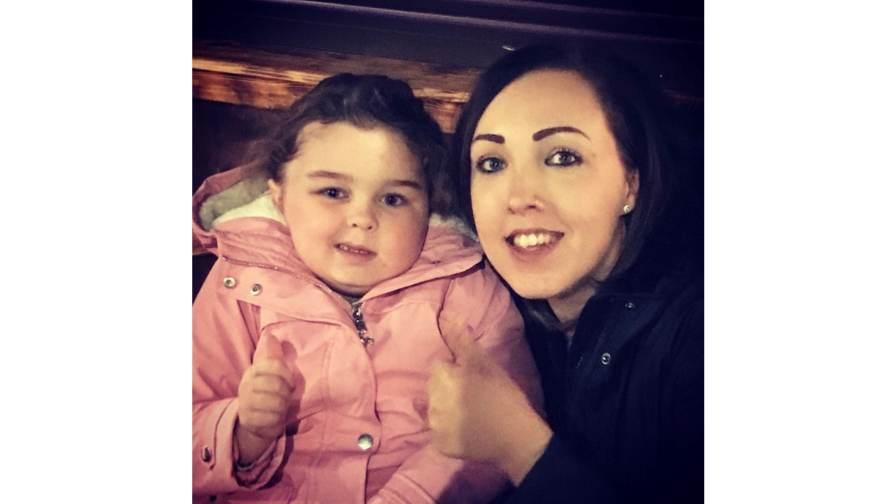
From June through to the autumn she was repeatedly admitted to hospital in Exeter. At one stage she underwent plasma exchange treatment, a procedure that replaces a person’s blood plasma in the hope of removing harmful antibodies. Despite this, the seizures continued.
“We were trying everything,” Carly says. “But they just kept coming back.” Eventually Lilly-May was referred to a specialist neurosurgery team in Bristol.
By this stage the seizures had become relentless. “We had to mark them down and time them,” Carly explains. “They were happening all day, every day.”
As the seizures continued, Lilly-May gradually lost abilities she had once had. She stopped being able to eat, drink, walk or talk independently.
The seizures took away everything. Lilly-May needed round-the-clock care. She was like a baby again.
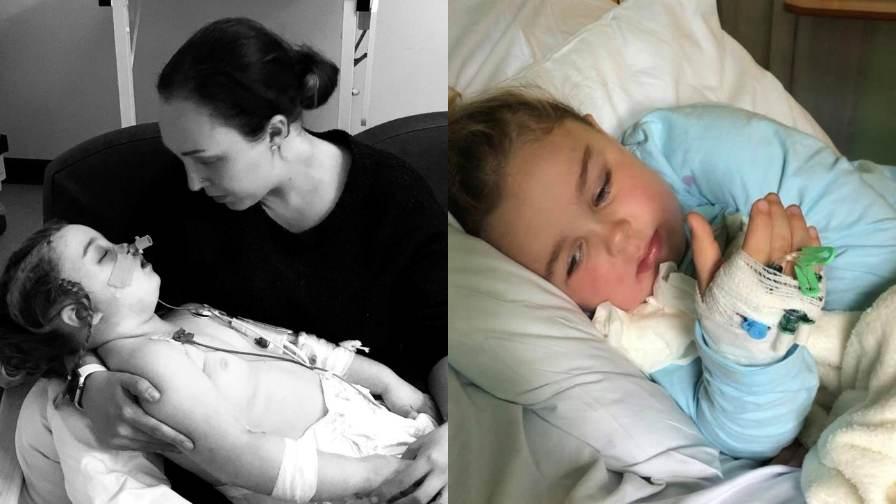
Doctors carried out a brain biopsy (a surgical procedure to remove a small piece of brain tissue for microscopic examination to diagnose tumours, infections or inflammation), hoping to finally understand what was causing the devastating symptoms. Carly remembers asking whether it could be a tumour.
“The surgeon told me there were actually worse things than a tumour,” she says.
Soon afterwards the family were given a diagnosis: Rasmussen’s encephalitis, an extremely rare inflammatory brain disease that mainly affects children. The condition causes progressive inflammation in one side of the brain, leading to frequent seizures, weakness on one side of the body and gradual loss of skills.
Action Medical Research is funding vital research at University College London to investigate the underlying causes of Rasmussen’s encephalitis. By studying the biological processes that drive the disease, scientists hope to improve diagnosis and identify new ways to treat children affected by this rare and devastating condition.
Doctors had hoped they might be able to delay major surgery for several years, but Lilly-May’s condition deteriorated so quickly there was no time to wait.
“By early October she was critically ill and in intensive care,” Carly recalls. “A doctor told me that if they didn’t operate the next day, Lilly-May had 24 hours to live.”
The family were urgently transferred to Bristol, where surgeons prepared to perform a complex and high-risk procedure. On 9 October 2018, Lilly-May underwent an 18-hour operation in which surgeons disconnected the two halves of her brain to stop the disease spreading to the healthy side.*
“I remember signing the consent form the night before,” says Carly. “I was in complete shock. You’re signing something that says your child might not pull through.”
The surgery saved Lilly-May’s life, but it was only the beginning of a long recovery.
Afterwards she spent months in hospital undergoing intensive rehabilitation, relearning skills she had lost. “She worked incredibly hard,” Carly says.
Today, Lilly-May still lives with the lasting effects of both the disease and the surgery. She has weakness down one side of her body, wears a splint on her leg and has a visual impairment. She can lift her arm but has limited use of her hand.
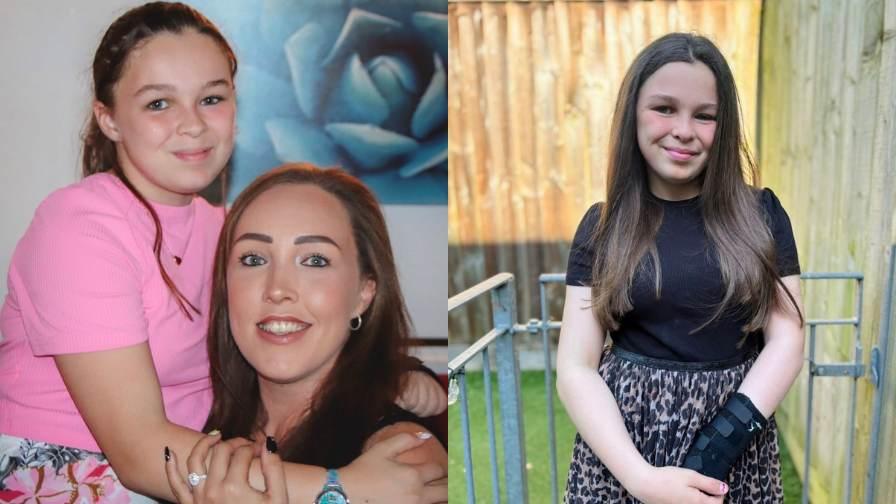
She still experiences seizures, although they are far smaller and less severe than before. Medication has helped keep them under control.
Now 11 years old, Lilly-May attends mainstream school and is thriving. “She’s a normal girly girl,” Carly says proudly. “If you met her, you wouldn’t believe what she’s been through.”
Looking back, Carly says her daughter’s strength continues to inspire everyone around her.
When she was given 24 hours to live, we never imagined we’d be where we are now. But Lilly-May proves every day just how strong she really is.
*The surgical procedure described is a hemispherotomy (or a functional hemispherectomy) involves surgically cutting the nerve fibres (white matter) that allow the two halves of the brain to communicate. Severing these connections prevents the seizures and inflammatory signals characteristic of Rasmussen's encephalitis from spreading to and damaging the healthy hemisphere.