
A new study that aims to identify symptoms and features of early-onset epilepsy in young children that can predict later neurodevelopmental outcomes, is being funded by children’s charity Action Medical Research. Children with early-onset epilepsy, which starts in the first few years of life, are more likely to have neurodevelopmental conditions including ADHD, autism and learning disabilities. This research could help Barnaby and the thousands of children in the UK who are diagnosed with epilepsy before they are two-years-old.
Barnaby’s mum Charlotte says: “Barnaby’s epilepsy was diagnosed when he was eight weeks old and although he initially responded to medication, within six months he became unwell again. Barnaby developed atonic drop seizures, causing a loss of muscle tone which made him go limp. He also began to lose skills he had previously learnt. He could no longer say words like ‘mama’ or wave and point – all these skills vanished.”
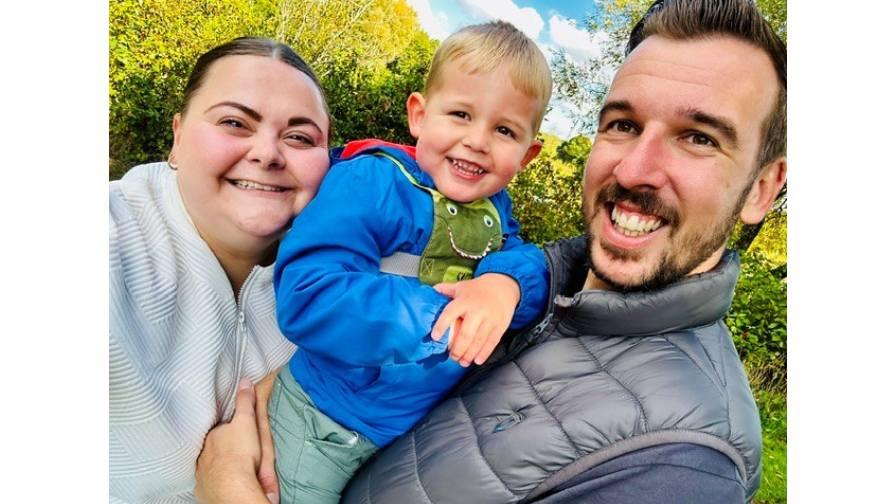
Barnaby’s seizures caused damage to his brain, and MRI scans showed that he has focal cortical dysplasia (FCD) in his left frontal lobe, which is an area of his brain that has not formed properly. The location of the FCD also means Barnaby has weakness on the right side of his body, affecting his balance and mobility. “Barnaby has to take five different medicines, twice a day, plus a sedative so he can sleep at night. While this has reduced the number of seizures he has to around 30-50 a day, he is now on the maximum doses. We’re worried as in the long term, there is a risk of serious side effects from the medications. Surgery may be the only way of ever fully gaining control of his seizures,” explains Charlotte.
Barnaby is one of around 64,000 babies, children and young people under 18 years old in the UK who have epilepsy.1,2 Early-onset epilepsy is associated with long-term challenges including a higher likelihood of learning, developmental and behavioural challenges compared to their peers, which can affect their overall quality of life. Dr Charlotte Tye, Senior Lecturer in Psychology at the Institute of Psychiatry, Psychology & Neuroscience, King’s College London, is leading the Brain development in Early Epilepsy (BEE) study (www.beestudy.co.uk), which is tracking early behavioural, brain and learning development in infants with epilepsy during their first two years of life. The study will assess the development, behaviour and brain function of young children with epilepsy to identify early-life predictors of later neurodevelopmental outcomes.
Dr Charlotte Tye says: “Before interventions can be tailored to young children with epilepsy, it is crucial to identify features of early development that can predict later neurodevelopmental outcomes. This is especially important in early-onset epilepsy, where the focus on seizure control may delay the diagnosis of behavioural or learning differences. We need to follow babies and infants from the point of an epilepsy diagnosis to identify early predictors of neurodevelopmental outcomes and provide targeted support to improve longer-term outcomes.”
Charlotte, Barnaby’s mum says: “We work hard to keep Barnaby safe as he is a toddler who wants his freedom, but his seizures cause regular injuries: He’s chipped his tooth and split his lips multiple times. We’ve padded our home as much as possible and he sleeps in a ‘safe space bed’. He wears a protective helmet most of the day and uses a walker frame out and about. We’ve had to adapt to his way of living."
Barnaby has taken part in research that followed babies with early-onset epilepsy and we welcome any research that can help us prepare for what Barnaby may face in the future.

The researchers hope to gain a deeper understanding of the connection between epilepsy symptoms and learning and behavioural challenges in preschool children, identify early brain changes that can predict later outcomes, and explore whether these changes explain the relationship between early-onset epilepsy and neurodevelopmental challenges.
Dr Caroline Johnston, Senior Research Manager at Action Medical Research comments: “We welcome this study which builds on the research that we have previously funded into the impact of early-onset epilepsy. Funding this research demonstrates our commitment to the long-term health and wellbeing of babies and children living with epilepsy and other medical conditions. This results of this research could help medical professionals and families better prepare for the longer-term symptoms , and work towards the development of early interventions to improve the quality of life for children with early-onset epilepsy.”
Ends
References
- Epilepsy Action, Epilepsy facts and terminology; https://www.epilepsy.org.uk/press/epilepsy-facts-and-terminology [website accessed 20 January 2025]
- Office for National Statistics; Estimates of the population for the UK, England and Wales, Scotland and Northern Ireland - Office for National Statistics (ons.gov.uk) [website accessed 07 January 2025]