
Research funded by Action is set to update clinical guidelines around the world, ensuring more children with a lazy eye get the best possible treatment to improve their sight.
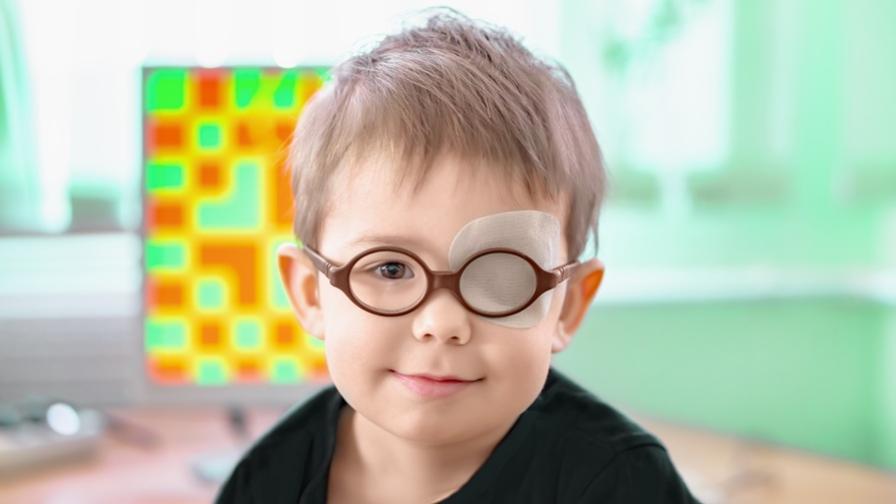
Amblyopia, often called lazy eye, is the most common condition linked to vision problems in childhood. Children with a lazy eye have better vision in one eye than the other, relying heavily on their ‘good’ eye to see.
In the UK alone, up to 5% of children have a lazy eye. It’s estimated that around 90% of the work carried out by children’s eye services is related to managing and treating this condition.
For more than 250 years, the main treatment has been to patch the stronger eye to improve vision in the weaker one. Currently, children are usually given glasses first, before patching starts. However, there was debate around how long children should wear their glasses before using a patch.
With support from Action, researchers at the University of Leicester carried out the first ever randomised controlled trial of eye patching for lazy eye. They compared a longer period of wearing glasses, against a shorter period and earlier patching. This involved more than 300 children, from 30 hospitals, across five European countries.
The study found that patching sooner is better for most children. However, younger children with milder lazy eye may benefit from wearing glasses for longer before patching. These results are set to update clinical practice.
The researchers have published a suggested treatment approach that tailors the type of treatment to each child. They aim to embed their new recommendations into clinical guidelines. This should see more children getting the treatment most likely to work best for them, leaving fewer with lifelong sight problems.
We hope our findings will help children around the world to receive optimised treatment”