
New research which aims to understand the causes of Rasmussen’s encephalitis, a rare and devastating brain inflammatory condition that mainly affects children, has begun at UCL Great Ormond Street Institute of Child Health. Rasmussen’s encephalitis is marked by chronic, progressive inflammation in one side of the brain, frequent seizures, one-sided weakness or paralysis and gradual mental decline. The research is being funded by children’s charity Action Medical Research and the British Paediatric Neurology Association (BPNA).
The results of this research could ultimately lead to children with Rasmussen’s encephalitis being diagnosed and treated more quickly. Carly’s daughter, Lilly-May, now aged 12, developed Rasmussen’s encephalitis in 2018, at the age of 4: “Lilly-May was a healthy little girl until the summer of 2018, when she had her first seizure and everything changed almost overnight. I took her to the hospital, but they reassured me that no further action was needed and asked me to come back if it happened again,” Carly explains. Despite receiving treatment, the seizures continued. Carly says: “It was a very scary time as Lilly-May began to lose the ability to eat, drink, walk and talk, yet we didn’t know what was happening. It wasn’t until doctors carried out a brain biopsy that they told us that she had Rasmussen’s encephalitis. We had never heard of the condition, and we couldn’t find any information about it.
We had hoped to delay surgery until Lilly-May was older, but she became critically ill, and I was told she would need a drastic operation.
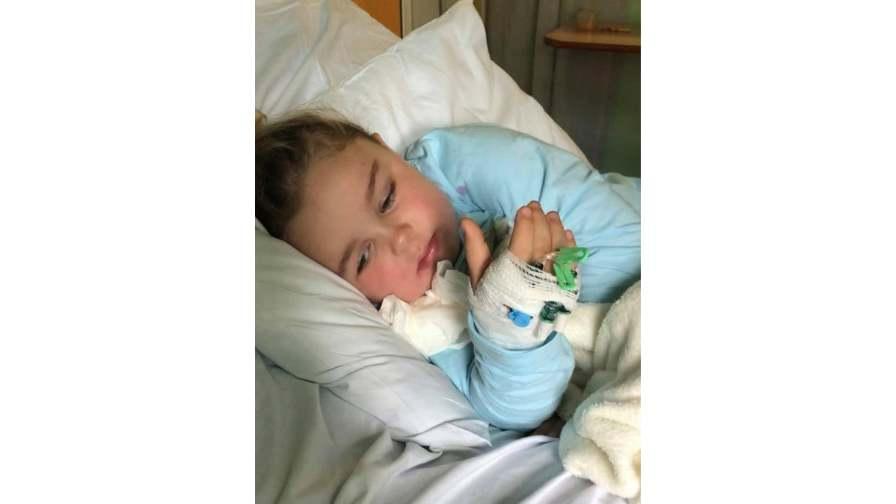
Most children are healthy before developing Rasmussen’s encephalitis. Dr Eva Ioannidou, Action Medical Research Training Fellow* and Doctoral Clinical Research Fellow at UCL Great Ormond Street Institute of Child Health, says: “The seizures associated with Rasmussen’s encephalitis usually become more frequent over time and can’t be fully controlled with medications. Other symptoms include progressive learning difficulties and weakness of one side of the body and in many children, their speech and language abilities may also be severely impacted.”
The only way to stop the seizures is a major operation to disconnect the affected half of the brain. However, this surgery can have life-changing consequences, such as permanent vision or speech loss.
Dr Ioannidou is carrying out laboratory research to deepen understanding of the underlying mechanisms driving this very rare condition. Dr Ioannidou will study brain tissue collected from children with Rasmussen’s encephalitis who have undergone surgery, along with cerebrospinal fluid – the liquid surrounding the brain and spinal cord – and blood samples. “Using a range of cutting-edge technologies, we will search for molecular clues – such as gene changes in brain tissues or the presence of specific proteins produced by immune cells – that could serve as early indicators of the disease,” says Dr Ioannidou.
This research is significant as early diagnosis is important. Dr Ioannidou explains: “By the time most children are diagnosed with Rasmussen’s encephalitis, irreversible brain damage has often already occurred.” This happened with Lilly-May and she underwent a complex 18-hour operation to prevent further brain damage. “Although the operation saved Lilly-May’s life, it was just the beginning of a long and difficult recovery. She spent so many months in hospital undergoing rehabilitation, learning to regain skills that she had lost. She is 12 now and still has seizures although they are less severe than before the operation. She has weakness down one side of her body and wears a splint on her leg. She can lift her arm but cannot fully use her hand, and she also has a visual impairment,” adds mum Carly.
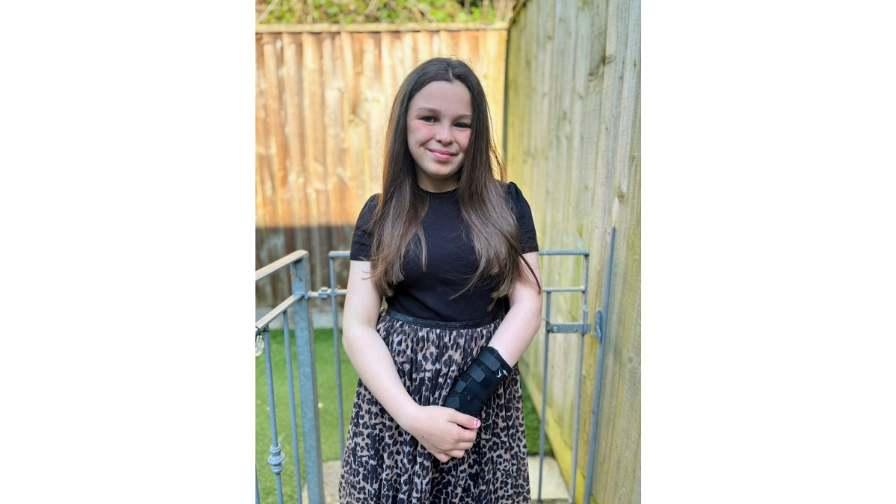
For families like Carly’s, this research offers hope that in the future children might be diagnosed sooner and have better treatment options. “When Lilly-May was diagnosed, it felt like we were stepping into the unknown because so little is understood about Rasmussen’s encephalitis. We felt completely powerless. Knowing that research is happening gives families hope. If doctors can understand why this disease happens and how to treat it earlier, it could drastically change the future for children like Lilly-May and families like ours,” says Carly.
Action Medical Research has been funding research into rare medical conditions that affect children and young people for many years. Dr Caroline Johnston, Senior Research Manager at Action Medical Research says: “We are committed to funding early-stage research for rare conditions like Rasmussen’s encephalitis for which there are limited treatments and no cure. Ultimately this research is one of the first steps which could lead to better tests, earlier diagnosis and ultimately treatments that can stop the progression of the condition and improve the lives of children with Rasmussen’s encephalitis.”
Find out about the work Action Medical Research is funding here: https://action.org.uk/appeals/rasmussens-encephalitis.