
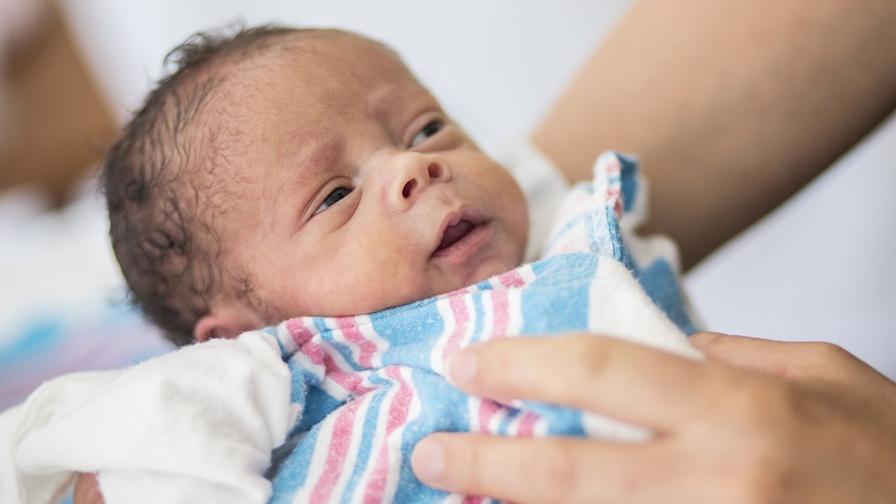
Cytomegalovirus, or CMV, is a common and usually harmless virus. But it can cause serious health problems – including sight or hearing loss – for some babies whose mothers unknowingly pass it on during pregnancy.
An estimated one in 300 babies are born with CMV – and around two to three babies born every day in the UK will develop permanent disabilities as a result of this infection. Early detection and prompt treatment helps to improve outcomes. But most babies show no symptoms at birth – and there is currently no routine screening in the UK, partly because of the lack of a suitable diagnostic device.
At Swansea University, Professor Vincent Teng and his team have developed a low-cost printed biosensor that can quickly detect CMV in urine or saliva.
With Action funding awarded in 2023, the team refined both the manufacturing and performance of the biosensor, which they’ve now shown can outperform current, more complex, tests.
Following the success of this project, the technology is a step closer to providing an affordable and practical large-scale screening method for newborn babies, which would be accessible to the NHS and other healthcare providers. In the future, the technology can be adapted for other infectious diseases, and even cancers, increasing its impact for patients.
The support from Action Medical Research has been absolutely vital. It enabled us to make real progress”
Helping children like Mylo in the future
Mylo was diagnosed with congenital CMV when he was three months old. Sadly, he has been severely affected and has hearing loss, visual impairment and other complex needs.
“Had we known at birth that Mylo had CMV, he could have had immediate treatment, which may have made it more successful,” says his mum, Ruth. “We were told that, ideally, treatment for CMV should be administered within six weeks to maximise the effect. That Mylo has been affected so severely is still a hard pill to swallow.”