
Every year, our Research Training Fellowship scheme supports some of the most promising doctors and scientists early in their research careers – helping to develop the next generation of leaders in children’s medical research.
We’ve just funded two new fellowships, investing almost £600,000, to help babies and children now and into the future.
Helping babies with fetal growth restriction stay safely in the womb for longer
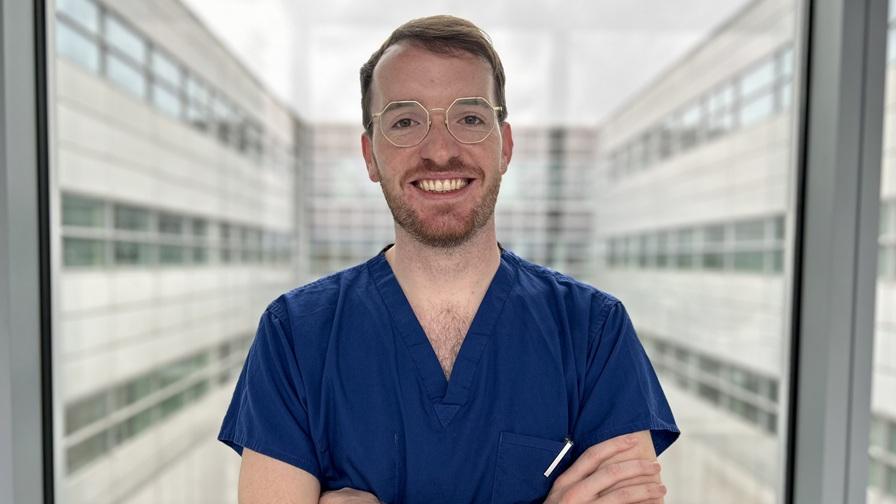
Dr Michael Wilkinson, University of Manchester
Fetal growth restriction (FGR) affects around one in 20 pregnancies worldwide. It happens when a baby grows more slowly than expected, usually because of problems with the placenta – the organ that supplies the oxygen and nutrients a baby needs to thrive.
FGR is a leading cause of stillbirth and serious illness in newborns, and can result in babies being delivered extremely early. There are currently no effective treatments. All doctors can do is monitor affected pregnancies closely and advise on the safest time for delivery.
Dr Wilkinson is investigating whether a drug already used during pregnancy could help affected babies stay safely in the womb for longer. The drug is routinely given before early delivery to help a baby's lungs mature – but evidence suggests it may also improve blood flow to the placenta, opening up the possibility of a new use.
If successful, this could lead to the first effective treatment for FGR, improving outcomes for babies and their families.
Understanding the link between learning disabilities and obesity in children

Dr Robert Legg, University of Cambridge
Around one in 40 children in the UK has a learning disability, and these children are a high-risk group for developing obesity. Some rare genetic conditions can cause both learning disabilities and obesity, suggesting that shared processes in brain development may be disrupted.
Dr Legg is aiming to better understand the mechanisms underlying these conditions. His research is focused on part of the brain called the hypothalamus, which plays a critical role in regulating body weight, behaviour and learning.
This research could help to explain why learning disabilities and obesity often occur together – and lead to improved diagnosis and, in the longer term, new treatments for children with these conditions.