

Millie and Scarlett's story
Fetal growth restriction and premature birth
After an early scan showed that Emma was expecting twins, regular ultrasounds were scheduled. By 16 weeks, doctors had grave concerns about the babies’ growth. The twins were diagnosed with fetal growth restriction (FGR), which is sadly a leading cause of stillbirth and serious illness in newborn babies.
There are currently no effective treatments for FGR. All doctors can do is monitor affected pregnancies closely and advise on the safest time for delivery. If the growth restriction is severe, babies may be delivered very early, so it is also a cause of premature birth.
The twins were given just a 60 per cent chance of survival. “They said we shouldn’t hold out hope of meeting them. It was brutal,” recalls Emma.
I remember I didn’t want any photos of my growing bump. It was so scary, it was easier to pretend it wasn’t happening”
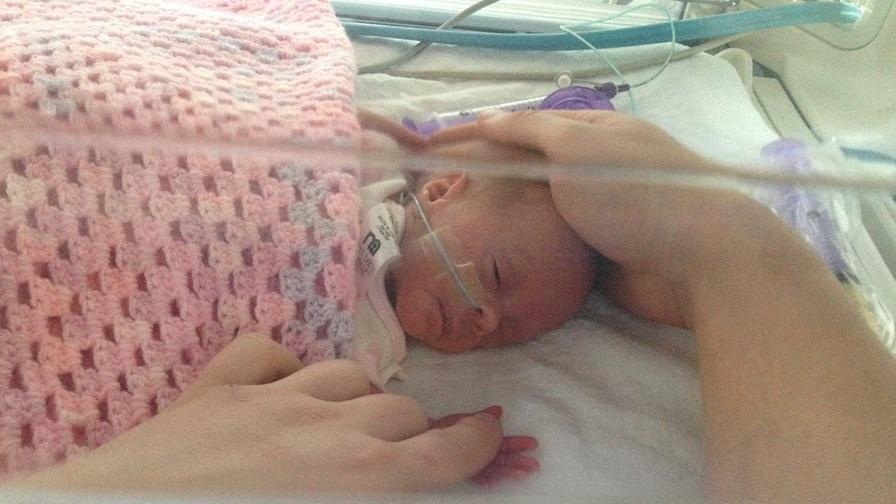
Emma and partner Dan tried to remain positive and had weekly check-ups. But at just 28 weeks into the pregnancy, the decision was made to deliver the babies by caesarean section. Scarlett was born first, weighing just 1lb 6oz, followed by Millie at a tiny 1lb 4oz. Both girls cried as soon as they were born, before being rushed into incubators, too small and fragile even to be held.
Sadly, Scarlett struggled from the start and needed intensive support with her breathing. At three weeks old, she developed necrotising enterocolitis (NEC), a serious and fast-moving bowel disease to which premature babies are especially vulnerable. It became clear that she could not survive, and Emma and Dan had to face the heartbreaking loss of their tiny daughter.
“They told us we could hold her until they switched life support off. We held her in our arms, on a cushion as she was so fragile,” remembers Emma.
Soon afterwards, Millie also developed NEC and became gravely ill. Thankfully, following surgery, she pulled through, and after three and a half months in hospital finally went home.
Today, Millie is a happy little girl, fully aware of her twin sister. “She knows about Scarlett. When we go to visit her grave, Millie is very sweet towards her and blows kisses,” says Emma.
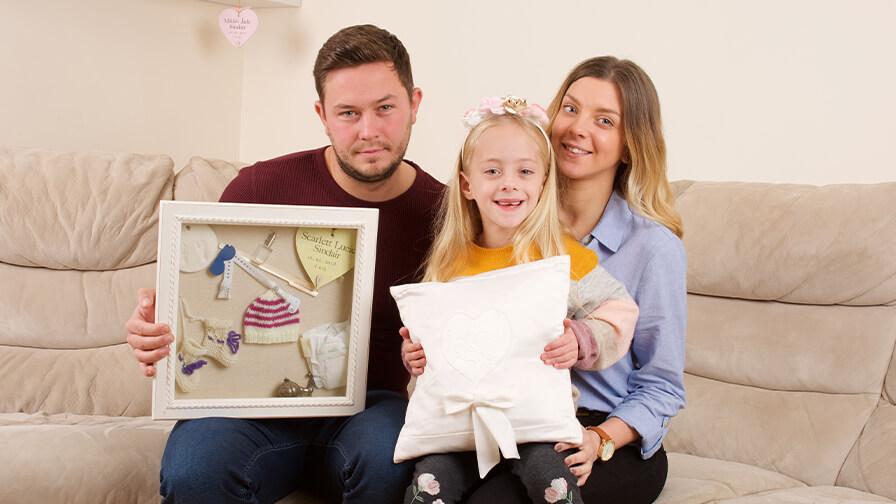
Moved by their experience, Dan has thrown himself into fundraising for Action, to support research into FGR and conditions affecting premature babies, including NEC.
Current research includes work to investigate whether a drug already used in pregnancy could help babies with FGR to stay safely in the womb for longer. If successful, this could pave the way for the first effective treatment for FGR, helping more families like Millie and Scarlett’s to avoid the earliest, most dangerous births.
If the research wasn’t done, doctors wouldn’t have the knowledge they do now to treat tiny babies born prematurely. We just hope research will find new ways to help treat fetal growth restriction and continue to improve care for babies born prematurely”