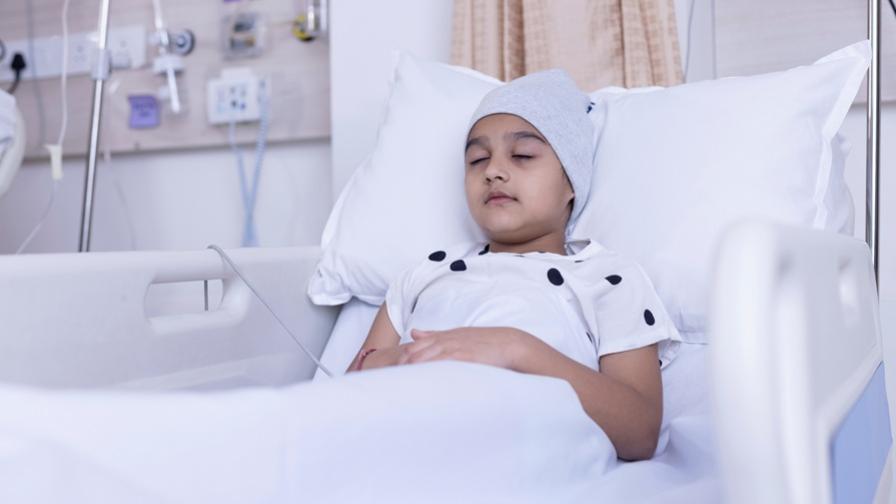
Each year in the UK, more than 400 children and young people are diagnosed with a brain tumour – and these remain the most deadly type of childhood cancer. Treatment is usually prolonged and gruelling, and while it can prove life-saving, it can also cause serious, long-term side effects.
With joint funding from Action Medical Research and The Brain Tumour Charity, Professor Andrew Peet and his team at the University of Birmingham set out to find new ways to assess and diagnose childhood brain cancers.
The team looked at the chemical make-up of brain tumours and found that levels of lipids and glutamine, biological substances in the brain, are very good predictors of how aggressive a tumour will be. This can help doctors decide what the best course of treatment is for each child – ensuring fast-growing tumours get intensive treatment quickly, while slower-growing ones avoid unnecessary treatment and its harmful side effects.
The team showed these clues could be detected using a specially adapted MRI scan, without the need for invasive tests or surgery. This particularly benefits young patients with tumours in high-risk areas, such as the brain stem, who usually cannot undergo a biopsy.
This diagnostic approach is now being used in clinics treating young patients. This work has also inspired research teams worldwide, who are building on the findings to better understand childhood brain tumours and explore new treatment options.
This breakthrough would not have been possible without the funding from Action. We can detect these chemicals during routine scans, so children can benefit straight away”